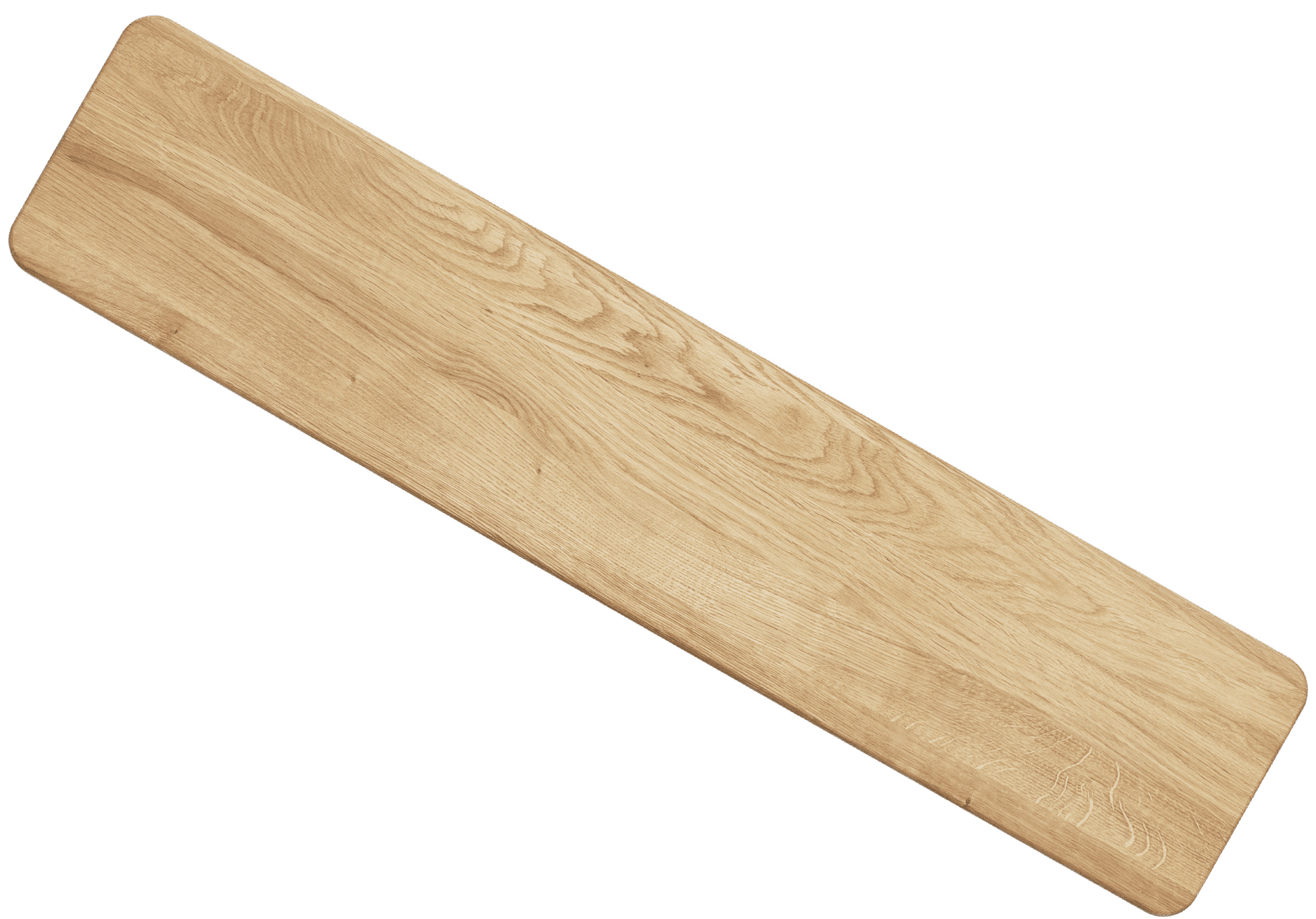
A monitor stand is a simple object: one horizontal surface, supports underneath and enough stability to hold screens. That simplicity puts more pressure on the material. When there are few shapes and details to hide behind, the surface itself becomes part of the design.
For Grindwood, solid oak made sense because it looks and feels like what it is. There is no printed grain layer and no thin veneer trying to suggest mass that is not really there. The edge of the shelf, the surface and the structure belong to the same material.
Oak has visual structure without needing decoration
Oak grain can be quiet from a distance and detailed up close. That makes it useful in a workspace: the stand can sit under a pair of black screens without competing with them, but it does not become visually anonymous.
No two boards are identical. Tone and grain pattern change naturally, and a finished piece may not match a product photograph exactly. We see that variation as part of owning solid wood rather than a manufacturing flaw.
Solid wood ages rather than simply wearing out
Every material changes with use. Solid wood can pick up small marks, changes in sheen and subtle shifts in colour over time. A hard-wax-oil finish helps protect the surface while keeping the texture of the wood more present than a thick plastic-like coating would.
That does not make oak indestructible. Water should not be left sitting on the surface, hot objects need care and any heavily used desk object will eventually show evidence of use. The difference is that ageing can become part of the character rather than immediately making the object feel disposable.
Why not veneer or a wood-effect board?
Engineered boards and veneers can be excellent materials. They can use wood efficiently, stay dimensionally stable and make good furniture more affordable. Our decision was not that solid oak is universally “better.” It was that for this particular small, visible object we wanted the material itself to carry much of the value.
The stand is something you touch when you move a notebook, slide a laptop underneath or adjust a screen. At that scale, the weight and edge of solid wood are noticeable.
The finish changes the mood more than the construction
Timeless Natural keeps the oak lighter and closer to its natural tone. Walnut Elegance gives the same material a darker treatment that creates more contrast with pale desks and blends more naturally into dark setups.
Underneath the colour, the product is the same: the same basic proportions, the same oak construction and the same role on the desk.
Material is part of the working environment
Most desk setups are dominated by glass, aluminium, plastic and emitted light. There is nothing wrong with those materials — they make modern work possible. We simply like introducing one object that feels warmer, quieter and less technological.
That contrast is the real reason oak belongs in Grindwood. The stand is functional, but the material changes the atmosphere of the desk as much as it changes the screen height.