Most knowledge work asks for a strange combination: be available to messages, meetings and changing priorities, but also protect enough uninterrupted attention to think clearly. That tension is why concentration can feel fragile even on days when motivation is high.
Psychology treats attention as selective. We focus cognitive resources on some parts of the environment while other things compete to capture them. Movement, novelty, contrast and meaning can all pull attention away. That makes the workspace relevant — not because a tidy desk magically creates productivity, but because every unnecessary visual or digital cue is another thing your brain may have to ignore.
Start by reducing friction, not chasing perfect focus
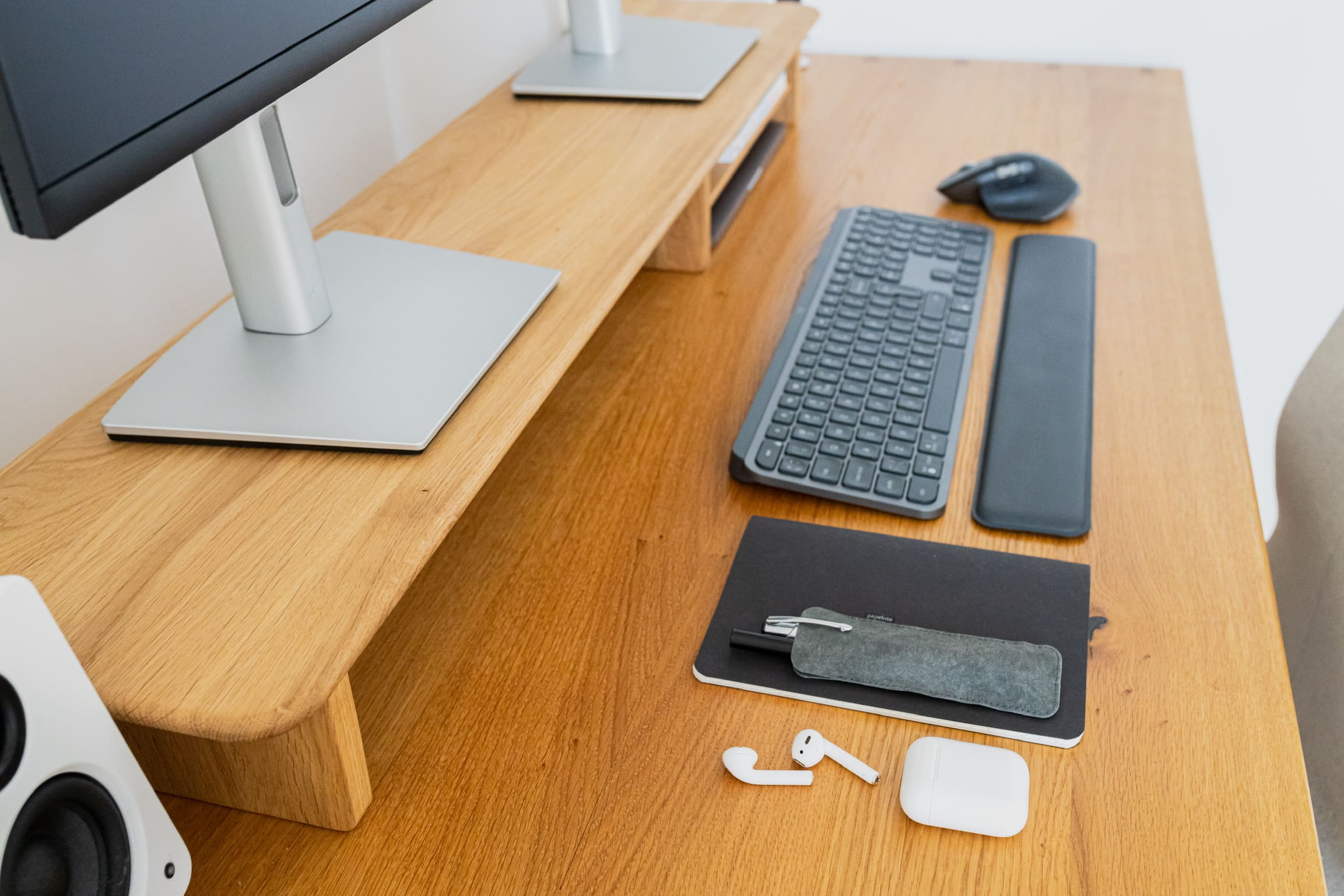
A useful workspace makes the next action obvious. Keep the tools for the current task close. Move unrelated objects, open tabs and notifications out of the immediate field of attention. If the desk has storage underneath or behind the working surface, use it to give inactive objects a home rather than letting them accumulate in front of you.
This is less about minimalism as an aesthetic and more about making the environment legible. You should be able to sit down and understand, almost instantly, what the desk is asking you to do.
Use a small transition ritual
Focused work often fails before it starts. We arrive at the desk carrying the previous conversation, commute, meeting or phone scroll with us. A short transition can help separate those states.
Try something deliberately simple: put the phone out of reach, close communication apps for a defined period, clear one square metre of desk, take three slow breaths, then write the single outcome you want from the next block of work. The value is not mystical. The ritual creates a repeatable cue that says: this is the task now.
Mindfulness can support attention — but do not turn it into another performance metric
Mindfulness practices usually involve bringing attention to present-moment experience without immediately reacting to it. Research on whether mindfulness training reliably improves attention is promising but mixed. Reviews have found benefits in some studies, while stronger randomized comparisons often show smaller or less consistent effects.
That is a good reason to keep expectations modest. Five minutes of breathing practice is not a productivity upgrade you install. It can, however, be a useful way to notice that your attention has wandered and practise returning it without turning distraction into frustration.
Protect the conditions for deep work
Once you begin, the environment should stop demanding decisions. Put water nearby. Set the screen at a comfortable height and distance. Use lighting that avoids glare. Decide in advance when messages come back on. If music helps, choose something you do not need to manage every few minutes.
The aim is not to build a perfect desk. It is to remove repeated micro-interruptions so that the difficult part of the session is the work itself.
Leave the workspace ready for tomorrow
A useful end-of-day habit is to reset the desk for the next start. Put away the items that belong to finished tasks, leave one clear note about where to continue, and close what no longer needs to stay open. Tomorrow's focus begins with tonight's stopping point.
At Grindwood, this is the broader idea behind the Journal: better work is partly about the object on the desk, but mostly about the relationship between body, attention, environment and routine.